Explainer
What is a personal emergency response system (PERS), and why Pakistan needs one
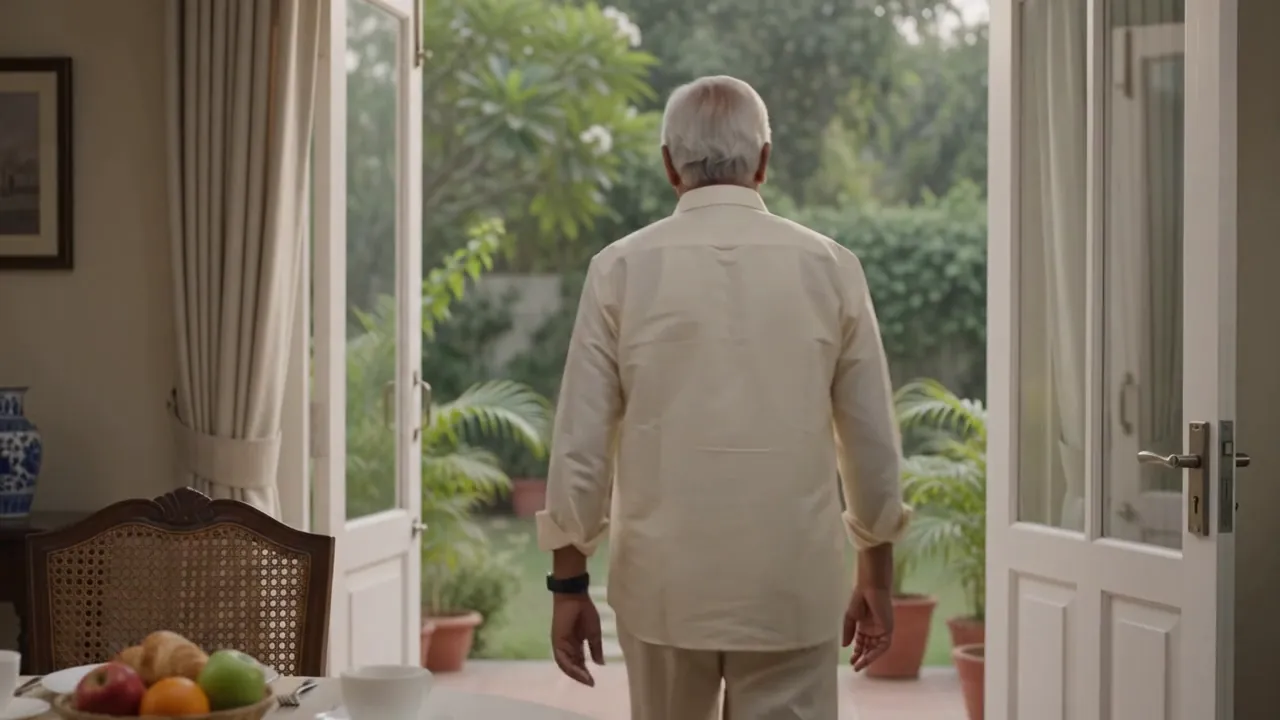
A personal emergency response system (PERS) is a button the person wears that reaches a set list of people when pressed, plus the service that keeps it working. In the US and UK the list is usually a call centre. In Pakistan it works best when it reaches the family.
In the US and UK, millions of older people wear a small button on a wrist or pendant. When they press it, someone is reached within seconds. The category has a name: personal emergency response service, or PERS. Most Pakistani families have never heard of it.
What a PERS actually is
Three things, working together:
- A device the person will wear. One button, no screen, nothing to learn. If it needs a phone nearby or a daily charge, it fails, because the person stops wearing it.
- A response. When the button is pressed, a defined list of people is reached, in order, until someone answers. In the West that is often a call centre. In Pakistan, it is the family.
- A service behind it. Someone sets it up, tests it, keeps the line active, replaces the band, and notices when the device goes quiet.
Take away any one of the three and you have a gadget, not a service. That is why the unbranded “SOS smart watches” on Daraz do not solve the problem: the hardware exists, the response and the service do not.
Why Pakistan needs it now
Pakistan has about 13.5 million people over 60 (2023 census). At the same time, nearly 2.9 million Pakistanis left the country for work in the three years to 2025. The joint family that used to be the safety net is spread across Lahore, Dubai and Manchester.
The result is a specific kind of worry. The parent is fine, mostly. The child calls every evening. And the gap between “fine, mostly” and the one evening that is not fine is where families live.
What a Pakistani PERS has to do differently
- Reach the family, not a call centre. Trust runs through people you know. The response list is the family circle, with a neighbour if the children are abroad.
- Work without a smartphone. Most parents in their 70s will not learn an app. The device needs its own line.
- Bill the child, serve the parent. The buyer is often abroad and pays in dollars; the wearer is in Pakistan and wants nothing to do with billing.
- Be honest about what it is not. A PERS is not an ambulance. It reaches your people fast; your people decide what to do.
What VITU is building
VITU Care is exactly those three parts: a 4G SOS watch with two call buttons and GPS, a family app that shows connection, battery and last location, and a team in Pakistan that sets it up with you and stays on WhatsApp. Booking is free, and early families get 15% off the device and 2 extra months free on their first year.
Book VITU Care.
Nothing is charged online. We contact you with the details and payment options.
Book VITU Care